Showing posts with label art business. Show all posts

FREE PAINTING DEMONSTRATION

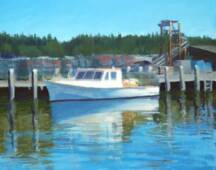
Bull Run Bluebells              16x20                       Oil on Linen

I will be conducting a painting demonstration  For the McLean Project for the Arts at the McLean  Community Center this coming Friday April 27 from 10:45Am to 1:30 PM. The demonstration is open to the public.
 
The address For the McLean Community Center is 
1234 Ingleside Avenue, McLean, Virginia.
info@mpaart.org

 I will start and finish a large oil painting from a small sketch painted outdoors. If you are in the area come on by and watch and ask questions about the painting process or the business side of being a professional artist. Last time we had quite a turnout with over 75 people showing up.


Artistic Integrity

By Armand Cabrera


As an artist I love the process of painting. I’ve always taken an illustrative approach to my painting in that I painted anything people would hire me to paint. Commissions were a partnership entered into with the idea someone was hiring me to give them my vision of the agreed upon subject. The client’s participation stopped at the edge of the canvas and the rest was up to me. They had right of first refusal on the work but they didn’t have the right to stand over me and guide my decisions as I painted like puppet masters pulling the strings for every aspect of the art, from subject to style of execution.

Even as an illustrator or production artist I expect to be hired for my knowledge not just my wrist. I am not for hire to render someone else’s vision; it has to be a collaboration or it’s not worth my time and effort. In the last few years people seem genuinely shocked by my stance. I guess the downturn took more than money out of the economy it also took many artists self-respect with it.

I am not talking about large projects that require multiple artists to complete them like television series’, movies or games. In those instances the project style requires consistency. I’m talking about smaller projects like ad campaigns, illustration assignments or gallery work that is completed by a single artist.

I believe if you hire an artist you have a responsibility to be familiar with their work. If you want to have a painting in a certain style of a living artist, then hire that artist. Don’t hire someone to be a stand in for that artist. If you can’t afford the original artist then then hire an artist whose work you can afford but let them paint it in their own style.

I think it is our responsibility as artists and illustrators to buck this trend. Who wants to be known as the guy who paints like (fill in the blank) only at a cheaper rate? Do you even have a career if all you are is a wrist for hire by people who can’t draw and paint?

Do you agree or disagree?

Art Shows

by Armand Cabrera


Art shows are hitting new lows these days. The worst offenders are front loaded with fees. They take money for a jury fee, a handling fee for stored shipping materials and even a hanging fee in some instances. I would never pay to hang my work, I don’t care what the venue is. These shows make their money off the fees. Many galleries now keep themselves in existence with these kinds of scams.

If you allow the show to recover all its money before the show opens then there is no incentive for the show to be promoted or to bring in collectors. Which brings me to another little scam where galleries ask for the collector lists of their artists. Never relinquish your client list to a venue. A venue that has no clients, charges you for space and doesn’t promote you in anyway is worthless to your livelihood as an artist and your career.

In my opinion there is nothing professional about these venues and you’re better off renting a public space for a night or weekend and advertising and hanging your own show or a show with a group of like-minded artists.

A lot of artists hold the opinion that it is an honor to show alongside other juried artists. Many times a gallery show will pay a nationally known artist to show at a venue from the upfront fees they collect. It’s sort of like an anchor store at a strip mall; they pull in the other stores. Big name artists are given spots or paid to show to get others to pay for the chance of showing with them. If you are juried into a show you’ve earned your spot no need to feel someone is doing you a favor or you’re lucky.

Art is hard enough, don’t let people take your money or take advantage of you. Shows need good artists good artists don’t need shows. Participate in shows that support the artists and their work and take a percentage of sales; this way the expense and work is shared by the venue and the artists.

Workshop in Great Falls Virginia


I've firmed up my teaching schedule for next year and for my first workshop of the new year I’ll be teaching a studio class in Great Falls February 3rd, 4th and 5th in 2012; the hours of the class each day will be 10am to 5pm. I will demo every day for an hour right after the lunch break. The price of this workshop is $425.


Registration is through the Great Falls Foundation for the Arts (GFFFTA)


Right now there are still spaces available. The workshop will focus on honing your skills for landscape still life and portrait painting. I will address drawing, color, and brushwork and good studio practices. We will also discuss what makes a successful painting and what step an artist can take to make sure their work has a focused idea from the start.


Students can work from sketches and photographs and I will discuss how to use each effectively to maximize the success of the final painting. We will also have some still life and cast set ups for those that want to work from life in the studio. The instruction will be targeted toward the individual student’s goals as a painter regardless of level of ability. The class size is strictly limited to 15 students.


This is the only completely studio workshop I am scheduled to teach next year, the other two are plein air landscape workshops. For those of you with a broader focus this is the workshop for you.


Translating the Idea

by
Armand Cabrera


I constantly see people in my classes and workshops struggling to find the right approach to painting from life. In my demos I try to stress the importance of good drawing and accurate color and value relationships. These tools allow you to make the marks you want to make when and how you want to make them. This is facility but facility only gets you so far. Many people think if they can just copy what they see the painting will be successful. The problem is you can’t copy, ever. What you can do, once you have the facility to make the marks you want is translate what you see into an intended arrangement of shapes.


Translating is the key to a successful painting from life. Everything you do, no matter how tightly or expressively you paint when working from life, is always translating.

Translating is turning 3 dimensional objects into 2 dimensional marks on your painting surface. What separates the more successful artists is the ability to only use the information that enhances the painting and doesn’t detract. This is easier said than done.

Everything is relative- color, value, shape and edges. All must be used in service of an idea that you hold in your mind for the finished painting. Translation requires more thought and ability than copying which is why so many artists struggle with painting from life successfully. You must understand that you are trying to fool the eye for the viewer and at the same time be aware of the marks you make and how they relate to the whole as just marks of color and value. It is this last part that gives the viewer the emotional response to your work. This is especially true for outdoor work.

When you paint outdoors you are always keying the color and value. Keying is limiting the range of color and value available to you in pigment and observed in nature. It is your exaggeration and sublimation of the information presented by you in an intelligent way that leads to a finished painting with clear intent.


No one is an artist unless he carries his picture in his head before painting it, and is sure of his method and composition. Claude Monet

St Simon Island Workshop


       First Lght                       36x48                                oil on linen


I'm here in St Simon Island for my workshop and show this week so my blog post willbe a little late. I should have a demo or sketch to post by Tuesday or Wednesday evening. I am sorry for the delay.

Professional Framing Techniques

By Armand Cabrera

Framing is almost as important as the painting itself. While people can disagree on the color or style of frame there are some basic approaches to framing that makes your work look more professional.

These are the steps I take when framing a painting

Here is how my frame looks just out of the box.


When I remove it from the plastic the first thing I do is put my name on it. This prevents galleries and venues from swapping my nice metal leaf or in some cases gold leaf frame with finished corners for some cheap chopped frame from Graphic Dimensions or Michaels. I also put the title on the back of the painting and a sticker with contact info. This allows collectors to find me since most galleries nowadays don’t give out collector info to the artists.


Next I put rubber bumpers or felt bumpers on all the corners so the frame doesn’t leave marks on the wall. If I have a case where I am framing stretched canvas I put them on the corners of the stretched canvas if it makes contact with the wall instead of the frame when it hangs.


Never nail your paintings into your frames if someone wants to swap the frame down the line you have to use something that doesn’t hurt the wood. I use offset clips or S clips to do the job. This way I can swap my paintings in and out of the frame with just a screwdriver.


I keep a number of sizes for the different sizes of my paintings. Because this image is on linen panel the clip is facing down into the frame.


If it was stretched linen I would flip the clip over so it stood out away from the frame to hold the canvas.


Once I screw in the clips I place the wire holders and attach those to the frame low enough that the wire will form a triangle shape when hanging but not stick out above the frame.


Next I get my picture hanging wire and attach one side to the wire holder. I do this by looping the wire thought the holders ring twice and then twist it back along the wire.


This insures it won’t unravel and bonk someone on the head while my painting is hanging above them on the couch.


 I then measure where I want the wire to end at its apex. I do this so when it hangs it doesn’t stick out above the frame. I cut the other side of the wire and fasten it in the same way.


I’m done and the picture is ready to hang on the wall. Only 24 more to go for the show this week at Narmada.

Art or Illustration

By Armand Cabrera


                                  N.C. Wyeth
The conversation about art and illustration keeps coming up. People want to draw a line making one better than the other. I think this is foolish.

Since I work both sides of the fence as it were, I thought I would lay out a couple of things I’ve noticed about the different disciplines and maybe help dispel some myths about both along the way.
                                   Aldro Hibbard
First myth, gallery artists have to sell which means they have to paint what people want and that means they are just like illustrators. Wrong. In gallery work people may commission you to paint a painting, they may even ask you to paint a specific scene but what they don’t do is ask you to submit roughs, then color studies and then fiddle with your picture as you paint it. Gallery artists paint what they want to paint and then take it to a gallery that sells it for them. No one has ever told me to fix or change a painting that I have delivered to a gallery. This happens all the time in illustration. Very few illustrators get a phone call for work, come up with an idea and paint an image for the client without outside feedback on that image.

Second myth, gallery artists are more artistic than illustrators. Wrong. The level of artistic accomplishment lays with the individual not the profession. Many golden age illustrators have stood the test of time and the works they created are now considered art. I would argue their work was always art. Their work has transcended the original intent of the painting. Some gallery work on the other hand has not done so well because of its trite treatment or overly sentimental subject matter.
                                      Jeff Jones
Third myth, if you take money for your art you are selling out. Wrong. Selling out is a term that gets thrown about quite a bit in the artist versus illustrator discussion. Artists look at illustrators as sellouts for offering their work as a commodity designed by a committee. Those same artists have no problem giving up their self-respect begging for grant money to fund their projects or going to openings trying to sell paintings at a show of their work. I think selling out is copying another artists style for monetary gain. Neither profession can claim the high ground here. And both fields have their hacks that chase the style of whatever artist is commanding the most work and highest prices. I see it in galleries and illustration.

People who respect their craft and their profession create things worthy of any museum; to label it unworthy because of the original intent is ignorant. All creative work is communication and will be judged by the ability to reach other people. An artist must impart truth to what they create for it to have value beyond the moment. Successful artists must satisfy the needs of their profession and the desires of their soul if they wish to survive and continue to create works that can stand the test of time.

                                       Dennis Miller Bunker
 
 
All art for this article is copyrighted to the respective artists, their estates or the artwork owners

Maine Workshop

by Armand Cabrera


I will be teaching another workshop in Maine again this year at the Acadia Workshop Center on Mount Desert Island. The center is close to Bass Harbor, Southwest Harbor and a short ride from Bar Harbor and Acadia Park. It will be a fun intense workshop and a chance to paint some of the most beautiful scenery on the East Coast. I hope you will join me. The workshop is from Sept 19-23 2011 and is limited to a maximum of 12 students. The weather is usually mild that time of year and we have a big professional art studio if inclement weather does occur.  I hope you will join me.

For More information contact Gail Ribas at the Acadia Workshop Center

Gail Ribas
Workshop Director
Acadia Workshop Center
7 Bernard Road
Bernard, ME 04612
207-460-4119
awcmaine@gmail.com

SourceTek Products

by
Armand Cabrera

From time to time I get questions about the type of materials I use and where to buy them. For my panel supplies I use SourceTek. It is a small company in Scottsdale Arizona that handcrafts their panels from the highest quality materials. JoAnne and Will Pierce are the owners of SourceTek and they are dedicated to excellent customer care and service.

SourceTek panels are the best panels on the market. I’ve been using them for almost ten years now. I just wanted to bring some of their new products to your attention. They have expanded their panels to include archival hardboard and a less expensive Academic Line that offers the same handcrafted professional quality of the other lines. The Premium line oil primed linen panels are made with Claessens linens. They also use Claessens acrylic cotton canvas for their Universal Line and the Academic line uses a medium weight polyflax canvas.

SourceTek offers three different substrates, Baltic birch, gatorboard foam and archival hardboard. These substrates are available with or without canvas and linen. They now offer more than 350 different panels.

Other products include the Silver Brush Grand Prix line of paint brushes and Holbein and the Che Son Painting Knives. Che Son knives are manufactured in Italy.

SourceTek has always been about providing artists with solutions for their painting needs. For years they have consistently maintained their quality when everyone else is cutting corners. If you are in the market for quality artist supplies and panels I recommend you give SourceTek products a try.


Website:

http://www.canvaspanels.com/

Email:

General Information: Info@CanvasPanels.com
Sales: Sales@CanvasPanels.com
Service: Service@CanvasPanels.com

Telephone:

(480) 483-6883, Arizona and Canada
(800) 587-5462, Toll-Free Within the United States
011-480-483-6883, International

Mailing Address:

SourceTek
P.O. Box 14765
Scottsdale, AZ 85267-4765

Negotiating Contracts for Freelance Work

By
Armand Cabrera


In writing these articles, I am sharing my opinions and experiences as a freelance artist. I am not a lawyer nor am I offering legal advice.

In this article I am not talking about gallery contracts for easel paintings and this article is geared towards freelance production or illustration work. Gallery contracts have been covered before here.

Let’s say you have set up your business to start freelancing. You have a website dedicated to your work; you have a business name and bank account. You have a portfolio to show. You have done your homework and decided on a range of pay that is commensurate with the industry you want to work in. You start applying for work and get a return call about your portfolio and a client wants to hire you for a project. You speak on the phone and maybe meet in person to nail down the specifics of what is expected of you before you agree to take the job. This is a good time to be professional and ask about scheduling, delivery, compensation and payment. You are negotiating a contract.

At its basic level a contract is an agreement between two parties for services and compensation. When agreeing to work for a client you are entering into a contract. Do you know what the terms of that contract are? You can never assume anything about an agreement to perform work and that is why it is better to have a contract in writing. Some people are afraid to ask for a contract thinking they will lose potential business, but a contract protects both parties involved and helps clarify any misunderstandings before they can occur.

If a client is reluctant to create a formal contract I make sure all my questions are answered in emails as a follow up to the initial discussion. If I have met with the client over the phone or in person I tell them at the end of the conversation that I would like to clarify the discussion and that I will email them my understandings. This gives them a chance to correct any misunderstanding before work starts.

The courts have ruled that promises made in emails can be binding under certain conditions. Emails are not considered legal contracts. When I talk to clients either in person or on the phone I write the down the key points of the conversation in a notebook. This way I am creating a journal of the discussion and all of this information helps if there ever is a problem and you have to go to court or arbitration.

I stay positive and don’t expect problems, I just prepare for them. As a freelancer here are things you want to negotiate before you start work.


Compensation

Are you being paid by the hour or the piece? Either way make sure the compensation offered is adequate with the work involved and fits into your predetermined range for work. I like to break up the assignments into first pass, second pass, and final approval. Once approval is given for a piece any changes afterward are a new assignment for work and requires more money.


Time

How long do you have to complete the assignment? This includes the time it takes for research and reference and of course the work itself. Will the client provide any source material or supporting material? What are their deadlines for delivery of those assets?

Delivery

How is the work to be delivered? If it is digital what are the specifications for the type and size of the files? What software do I have to choose from to do the work? If I am creating traditional art what medium can I work in? How is the piece to be delivered, can I send a digital file and who pays for scanning?

Payment

Payment is not the same as compensation. When and how are you going to be paid? Check, electronic transfer? Each system is a trade between cost and convenience. Do your homework and work it out with your bank or service ahead of time so there are no unexpected charges for you.

Do you get a portion up front? I always ask for a deposit up front and most of the time I get it. A deposit does two things it shows you the client has money and that they don’t expect you to work for free. For long term jobs for games I like to set up milestones. I don’t like going more than a month at a time for payment, two weeks is even better. That way I don’t have too much invested if the check bounces or doesn’t ever arrive.

Model fees

If you are doing illustration it is always good to ask about model fees if appropriate. Some clients have a budget for them and some don’t; either way you need to know so you can negotiate a fair wage for your services.

Ownership and use of images

How will your work be used and what rights are being negotiated? You need to discuss this before you start the job. Can you use the work in your portfolio? If so when would that be appropriate? For movies or games you might have to wait until the property is released publicly. Make sure all this is understood from the beginning.

Starting a Career in Art part 2

By Armand Cabrera


Starting a business as an artist or illustrator is a huge leap of faith for most people. I used to joke with my family that at least I didn’t want to be a professional poet which was the only other profession that you have even less chance of making your sole income from than being an artist.
Respect the process and yourself. Whatever it is you choose to do, treat it with reverence. I don’t kid around about my art, I treat it seriously. I am never afraid to turn down work that I think is beneath me or I think would demean my skills. I try not to be rude when asked to do something silly because I am an artist, but I really don’t need to paint signs for lemonade stands in the neighborhood anymore.

 When I started and I would get turned down for a job I would ask why and if I was lucky enough to get an honest answer I never ignored the advice given. Especially if it had to do with improving my skills so I could get professional work.

I have turned down questionable jobs because on top of everything else they wouldn’t sign a contract. Contracts not only protect you but also your clients. In my experience the only people who don’t want to sign a mutually agreed to contract are people who plan to break them anyway or have some hidden agenda that they don’t want to reveal.

If you take a job, do your best work possible. One of the bad things about lowballing jobs is it creates an atmosphere of doing things just good enough. I make sure that if I agree to a price for a job I get paid well enough to do my best work. If you aren’t going to do your best don’t take the work at all.

Reward yourself for a job well done. One of the things I learned was to pay myself first. Give myself a little treat when I finished a job just to make the parts of it that weren’t fun worthwhile. In really slow times that might not be buying something, it may be just a day off to sit around and read. Rewarding yourself for a job well done is important, especially as a contractor when a lot of the time the only compliment is the check.

Starting a Career in Art

By Armand Cabrera


I see a lot of young people coming out of art schools these days saddled with high debts and little to prepare them for the real world of a working artist. I thought I would offer some advice on making a living as an artist.


A portfolio is worth more than a degree

Your portfolio is your strongest asset, degrees don’t matter. When you start looking for work avoid jumping into the market too soon if your work isn’t at a professional level. This is the biggest problem I see for most students when they decide to get into art. They compare themselves to the bottom of the professional market. Always compare yourself to the top of the market and work on your skillsets to achieve that quality.


Know what you are worth

Decide on a price for your work before you ever approach a venue with a portfolio. Do your homework for the industry you want to work in. Know what salary ranges are and what is expected from you as an artist. Never apply for a job beyond your skillsets no matter how much you want to work. Make sure you know what you need to make each month monetarily to pay your bills. Know how long it takes you to paint each piece in your portfolio. That way you know how much work you have to finish each month to live comfortably.


Never undersell yourself.

While it is good to start low and work your way up, don’t give away your services –ever. Respect the process and your craft and it will provide you with a living. There is a lot of noise about how tough it is to get into the industry. There are more opportunities now than when I started. There are so many venues now; social gaming, online gaming, plus all the consoles on the market and all the TV and Movie opportunities. There is a lack of qualified artists in the industry mainly because schools are cashing in on the art craze but aren’t training the students properly.


Start small and work your way up.

I started getting work locally then regionally then landed bigger national jobs. I didn’t start by trying to get a job at the top. I built a portfolio of solid work at every stage that I was proud to show.
I went to conventions a couple of times a year and showed my work. It is how I landed my first jobs in the industry.
I did the same with competitions when I wanted to get into galleries. I entered local, then regional, then national competitions. I Stayed and competed at each level until I received recognition and awards.


Go where the work is

When you are starting out you can’t really afford to stay in East Gall Bladder forever if there are no jobs there. Those smaller markets tend to be more saturated because of the limited jobs opportunities. The pay tends to be lower and the skill requirements do too. That can help you find work if you are properly trained but probably won’t sustain you fulltime. Once you conquer the local market it is time to consider going to where the jobs are. You have a much better chance of getting an art job in Los Angeles or Seattle than South Dakota.


Create your business identity

This is often overlooked starting out. Have a professional looking website or blog and show only your best work. Secure your domain name and use an email with it for work. Don’t advertise for Hotmail and Google. Your email should be your name. Like soandso@yourname.com. Join as many professional networks as possible. Avoid creating blogs where you express your opinions on aliens and the illuminati conspiracy.

Have business cards that have all your contact information. Get in the habit of handing them out. While it is okay to have a digital business card to share if you have a smart phone but smart phones only make up 19% of the market.


I will come back to this  in a couple of weeks with more on the actual process of running a business. Invoices, contracts, tax strategies for a sole proprietor and the like.

Charles Muench Workshop

I want to announce a great opportunity for artists. Charles Muench is offering a workshop in June.

 I've known Charles for quite some time now and he has become one of the best painters around. I know that phrase gets thrown around  a lot these days but in Charles' case it is backed up with a string of top awards from some of the most premiere events in the United States.


  Charles just recieived the Southwest Art Award of Excellance at the California Art Club's 100 Gold Medal Show this year. In 2010, Charles won the Edgar Payne Award for Best Landscape at the California Art Club's 99th Annual Juried Exhibition. He was unanimously elected a Signature Member of the California Art Club. Charles received the First Place Award at the 2008 Heritage Art Exhibition presented by Joan Irving Smith as well as the Collector’s Choice Award at the 2008 and 2005 Maynard Dixon Country Invitational. Charles was awarded the First Place Award and “Best Painting of the Cove” Award at the 2007 and 2005 Crystal Cove Alliance Invitational in Laguna Beach, CA. He also was honored with the Best of Show/Artist’s Choice Award at the 2006 Telluride Plein Air Show. Charles received the Gold Medal Award at the San Luis Obispo Plein Air Event in October 2002. Charles has had his work included in the Arts for the Parks Top 100 Exhibit. His work is accepted annually in the California Art Club’s Annual Gold Medal Exhibit and the Gilcrease Museum’s American Art in Miniature Exhibition

Don't miss your chance to study with one of the best contemporary painters in the country. Here are the details

HIGH PLAINS PAINTING

Five Day Workshop Painting the Eastern Sierra


Locations include the California Sierra alpine of Hope Valley to the high plains desert of Nevada- all within 30 miles!
Two states and a lot of scenery!

June 13 – June 17th

$550.00

E-mail Charles Muench for deposit and reservation information.


There’s a lot of land between the eastern Sierra and the high plains of Nevada to paint! Come on out and catch the transient beauty of spring in this unique country. We’ll make the most of each day- demonstrations, painting, critique, and taking in the gestalt of a group of artists painting together. We meet each morning at a different location. Having lived in this area for over ten years, I know of a lot of sweet painting spots and late spring in the Sierra is a truly unique experience. We will paint the ranch lands of the Carson Valley. We will paint the vast landscape of the Pine Nut Mountain range looking across to the Sierra range. We will paint the architecture of the rural Sierra town of Markleeville (my personal mountain Wobegon!) I will also offer a special hiking trip, for those who want, to paint the spectacular spring run-off of Markleeville Falls- less than a mile but some up hill (and with the amount of snow, this will be a record year!) For those who don’t want to make the hike- no worries! I will do two demonstrations during this day! I have attached a class description as well as a materials list.

There are many good hotels in the Carson Valley. Here are a few. Budget hotels are also available.


Contemporary Realism and Modern Technology

by
Armand Cabrera


As an artist in the beginning of the 21st century one of the things available to me is ease of travel. I can paint anywhere in the country and to a larger extent the world because of relatively inexpensive travel.

I can drive to just about anywhere on the east coast in a day and in a couple of hours I can be anywhere in the country by jet. These facts separate my body of work from artists who were painting 50 or a 100 years before me. Many of these artists spent the majority of their lives in one place making only a handful of long distance trips away from their homes .

As a painter this allows me to build a career based on the quality of my work not just the subject matter where I live. Galleries, because they are mostly brick and mortar establishments have been slow to accept this fact of modern life. Many galleries only deal in regional subject matter and won’t even consider taking work based on scenes outside their geographic area.

I think this is to their detriment. My best selling galleries ask for my best work; they aren’t concerned with location as much as my other galleries and I think it is reflected in my sales for those galleries. What other galleries fail to realize is long distance travel is a fact of life for most people who can afford to buy paintings. If they take the time to use the technology available to them they can quickly build a following of collectors not based in their little region of the country and in fact the better galleries do this with blogs and newsletters and a strong internet and social network presence.

Artists have changed quicker than galleries and if galleries want to survive they must change too. Sitting in a gallery waiting for people to walk in and buy something is no longer a viable business model. This is reflected in the amount of galleries that have closed their doors in the last three years most of which failed to grasp the importance of information networks and social media.

Thoughts on Failure

by
Armand Cabrera

No person gets to be successful without learning to deal with all the little failures and setbacks that are part of the experience of any worthwhile endeavor.


I have learned many things the hard way, most of my life. This comes from jumping into things too quickly. Sometimes it works and sometimes it doesn’t.


I have always had a stubborn determination to finish what I start. This drive to paint through any difficulty has helped me to get to this place in my career but not without the pile of bad canvases that usually don’t see the light of day. As I have aged I’ve tried to be more thoughtful at the beginning of the process without sacrificing passion. This is easier said than done sometimes. While emotions are good they can also cloud ones judgment.

Last week’s painting excursion was one such trip. I had been out the day before with some other artists at Great Falls National Park and had managed a good little painting. While we were on the way to our location I spotted a scene in the road that I wanted to paint. I decided to come back the next day and work on a large 24x30 canvas of it at the same time of morning.


Arriving early the next day to get set up, I knew it was going to be one of those days. Meeting my friend Jack, the weather looked iffy. Although the weather was supposed to be clear and in the seventies it was cool and overcast. I waited around for things to burn off but it never happened. Jack got in two paintings while I fumbled around.

I decided to go ahead and paint the scene anyway even though it didn’t have the charm of the day before. About two thirds into the canvas the sun came out and ruined any chance of finishing the painting. I wiped it down and we decided to head over to the falls to paint one more time.


The falls didn’t go any better for me. I was tired from the first attempt and my mind was still on the first painting. Not a good way to begin a large painting of a complex subject. I have painted the falls many times but not with such a large canvas. I wasn’t focused on what I wanted to do. I didn’t think about the composition and I spent too little time on the drawing and jumped into the painting too quickly. Instead of showing nature I can’t be beaten so easily after my first attempt; it whacked me over the head twice to remind me never bring a knife to a gun fight, and always bring your best effort.


I didn’t wipe the second painting mostly to have something to show for seven hours’ worth of effort. It seems I still have to do things the hard way every once in a while to remind myself nothing is a given, success has to be earned one canvas at a time.

Book Review: Color and Light

Review by Armand Cabrera


James Gurney hits it out of the park again with his new art instruction book Color and Light: A Guide for the Realist Painter. Following the success of his other art instruction book Imaginative Realism, which was released last year, Gurney’s new book Color and Light is filled with everything you will want to know about these two important subjects, written in a clear and concise style. This is not a step by step how to book per se but there are plenty of explanations describing the effects of color and light and how to use them in your paintings. The images accompanying the text are made up of James Gurneys own plein air paintings, figure studies and illustrations for his professional assignments. Over 300 color Illustrations and diagrams.


Beautifully printed and designed, Color and Light is sure to be considered the text on the subject for years to come. Gurney writes about this subject as a successful, professional artist. This is not someone who doesn’t make their living as a painter or some scientist who only observes but offers no practical application for his information. The paintings by Gurney are a feast for the eyes, his talent is showcased well here and you see the depth and breadth of his formidable abilities as an artist. He has included images of city scenes, portraits, landscapes, illustrations for National Geographic, magazine articles, science fiction and fantasy book covers and his own series of Dinotopia books. The sheer amount of work is amazing and you begin to understand that here is someone who loves the process of making art.

Many people know Gurney as one of the premier illustrators in the world and the author of the Dinotopia books, but for those who don’t follow his excellent blog gurneyjourney, they may be surprised to find he has always been an avid plein air painter as well. His landscapes are just as accomplished as any of his illustrations. Many of these small outdoor landscapes are showcased in this book and make up a third of the color illustrations. This is important because it is his work painted outdoors from life that infuse his real and imagined scenes with a sense of light.


Some books are considered classics in the field of art instruction; Harold Speed’s The Practice and Science of Drawing, John F Carlson’s Guide to Landscape Painting, Andrew Loomis’ Figure Drawing for all its Worth and Creative Illustration, Edgar Payne’s The Composition of Outdoor Painting, and Richard Schmid’s Alla Prima. Jim Gurney’s Color and Light is one of these books. There is no excuse for you not to buy this book, it is very reasonably priced and the wealth of information in it will help anyone interested in representational art. Whether you are a seasoned professional or Sunday hobbyist, this is the book for you.


You can order Color and Light: A Guide for the Realist Painter from the Dinotopia website where James will sign copies if requested
http://www.dinotopia.com/dinotopia-store.html

The book is also available from all the usual book retailers like Barnes and Noble, Amazon and Borders
For more information on James Gurney visit his websites
http://jamesgurneyoriginalart.blogspot.com/